


Free spin bonus rounds serve as the main event in most modern slots. They turn a routine spin session into something significantly more thrilling—the area where a game’s real payout potential lies. Take Gates of Olympus 1000. Its free spins feature goes beyond a simple re-trigger trick. It’s a purposeful design choice that redefines volatility, multiplier buildup, and the maximum win ceiling. Knowing how these rounds work, what triggers them, and how they differ from regular spins enables players evaluate risk, reward, and the rhythm of the game. This article dissects free spin bonus rounds, using Gates of Olympus 1000 as the main example while also examining wider slot mechanics to show why these features grab so much attention from players and developers alike.
A Multiplier System That Defines the Free Spin Experience
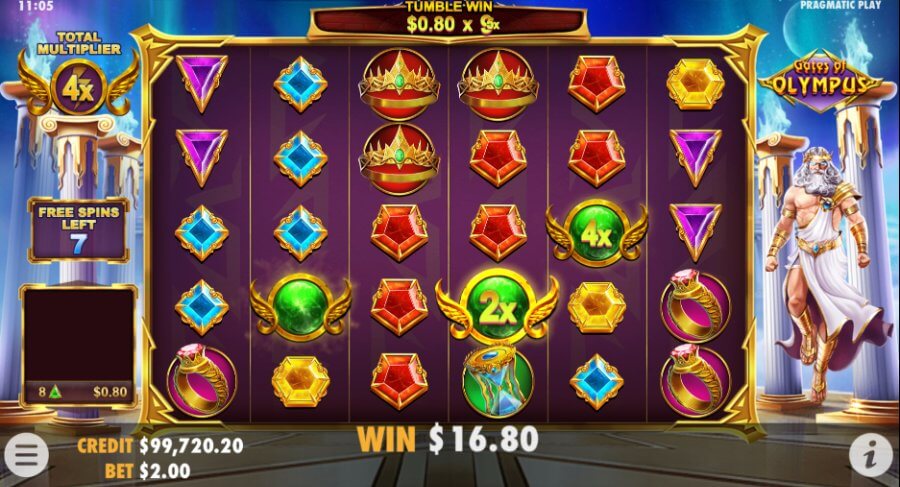
Multiplier symbols fuel Gates of Olympus 1000, and they function in a different way in the base game versus free spins. In both phases, multiplier orbs resemble coloured spheres with wings, carrying random values: 2x, 3x, 4x, 5x, 6x, 8x, 10x, 12x, 15x, 20x, 25x, 50x, 100x, 250x, or 500x. In the base game, when a multiplier symbol drops during a winning tumble, its value gets added to that sequence’s total win and then is removed. In the free spins round, every multiplier symbol that shows up accumulates to a running total that persists for the whole feature. That contrast is everything.
This persistent collection is what sets Gates of Olympus 1000 top login apart from slots where multipliers work for one spin. Once free spins commence, a meter shows the running total multiplier, which starts at 1x and increases with every multiplier symbol that drops—even if that spin fails to generate win. When a tumble sequence triggers a payout, en.wikipedia.org the current total multiplier is applied to that win, and the multiplier stays put for the next spins. The result is a snowball effect: later free spins deliver a lot more power because the multiplier has built up to build up, transforming even small symbol clusters into serious payouts.
The Accumulating Multiplier in Practice
Picture a free spin where the total multiplier has climbed to 50x after a few multiplier symbols have appeared. A small win of 5x your bet from a cluster of low-value gems suddenly yields 250x. If another multiplier symbol worth 100x lands during that same tumble, the total multiplier leaps to 150x, and any later win in that spin sequence gets enhanced by that new number. Because tumbling reels eliminate winning symbols and let new ones fall, a single free spin can cause multiple win evaluations, each one benefiting from the growing multiplier. This dynamic between tumbling wins and a multiplier that never resets is what generates the slot’s trademark high-volatility spikes.
There’s no upper bound on the total multiplier during free spins, and that’s a big deal. Individual multiplier symbols top out at 500x, but the accumulated total can theoretically go into the thousands if enough multiplier orbs land across the 15 free spins and any retriggers. This open-ended design is what enables the 15,000x max win possible. It also means outcomes are spread all over the place. Many free spin rounds finish with a modest total multiplier and a modest return, while a tiny fraction reach crazy levels, providing the kind of wins that earn the game its reputation and keep players coming back.
Analyzing Regular Spins and Free Spin Rounds: RTP and Variance Dynamics
Gates of Olympus 1000 generally has a RTP (RTP) of 96.50% in its standard configuration, though operators can provide reduced variants. That RTP is a extended average mixing the main game and the free spins feature. The payback isn’t spread evenly across the two phases. The main game functions at a reduced effective RTP, often giving back around 60% to 70% of bets over lengthy plays, while the free spins feature contributes a significantly bigger portion of that 96.50%. This arrangement is common for high-variance slots and explains why plays that don’t hit a bonus often result in a net loss. The main game is designed to be a challenge; the feature is where the real money moves.
Fluctuation—or dispersion—describes how payouts are spread out over time. Gates of Olympus 1000 is high variance, so wins are rare but can be large. The free spin round cranks this up because the growing multiplier creates large variations in payoffs. In the primary game, the top single-spin result is capped without a continuous multiplier, so even a screen packed with valuable symbols yields a capped result. In free rounds, that same screen can be valued at many times higher due to the accumulated multiplier, generating the kind of payout spikes that define high-volatility slots what they are.
For gamblers, the key insight is that the free spin round isn’t just a extra—it’s the key route the game offers its promised payout potential. Money management often boils down to enduring the base game sufficiently long to activate the bonus. The difference between the two stages also affects how the slot feels: the primary game can seem harsh and tedious, while bonus spins contain intense excitement and the opportunity for a round-transforming payout. Recognizing this discrepancy helps establish achievable expectations and illustrates why the free spins round is the focal point of any game evaluation. If you’re not triggering features, you’re probably losing ground.
Common Misconceptions About Free Spin Bonus Rounds
A frequent myth among slot players is that free spin rounds are ‘due’ after a long dry spell in the base game. This originates from the gambler’s fallacy—the mistaken idea that past outcomes affect future independent events. In Gates of Olympus 1000, the RNG governs each spin’s outcome on its own, and the chance of landing four scatters is the same on every spin. Going 500 spins without a bonus doesn’t make a trigger any more likely on spin 501. The game’s volatility can create long gaps, but that’s just a natural result of the hit frequency, not a sign that a payout is coming. The machine has no memory.
Another wrong idea is that buying the free spins feature ensures a profit or at least a fair return. The bonus buy is priced to keep the house edge, so over a large number of buys, the average return will be a bit below the cost. Individual results swing wildly, and plenty of buy-ins return less than the 100x price. The attraction of the buy option isn’t a math edge—it’s the option to skip the base game and jump straight into the high-volatility feature, which some players find more fun. Think of it as paying for entertainment, not a sure thing.
Some players also think that stopping the reels manually cbc.ca or using turbo spin can influence when the bonus hits. These interface options only change the animation speed and the timing of the spin request—they don’t touch the RNG. Each spin’s outcome is locked in the moment you press the button, and anything you do after that is just for show. Knowing this helps you focus on the game’s real mechanics instead of chasing patterns that aren’t there. The button you press doesn’t influence the result; it just requests it faster.
Free spin bonus rounds are still the most exciting part of modern slots, and Gates of Olympus 1000 boils that excitement down to a pure, multiplier-driven ride. Moving from base game to bonus isn’t just about free spins—it’s a whole different way wins get built and boosted. Once you comprehend the trigger conditions, the persistent multiplier, and how retriggers work, you can see past the surface thrill and recognize the careful math design that makes each free spin round its own little story. The bottom line: the free spins feature is where the slot really lives, and knowing how it works is the best way to play the game on its own terms, with a clear view of both the risks and the huge upside.
The function of Scatter signs inside the Free Spin Feature
Scatter signs don’t vanish when bonus spins commence. They keep working, triggering again extra spins. Inside the round, whenever at least three Zeus icons land on the reels, you receive an additional five bonus spins added to your remaining spins. This is possible several times, and there isn’t any strict limit on the amount of extra spins you can get—though the 15,000x max win limit sets a boundary on the action. Having the chance to prolong the feature is particularly valuable since it offers more chances for multiplier orbs to hit and boost the total multiplier. Each additional spin is another shot at a massive payout.
The retrigger rule during free games is somewhat easier than the base game trigger. You must have four scatters to activate the bonus, but only three inside the bonus to grant 5 spins. That easier condition renders extra triggers more common after the round is running—a carefully chosen design decision. It extends the typical duration of the bonus and creates momentum, as you see simultaneously the spin counter and the overall multiplier increase at the once. Every additional trigger also renews the excitement, since every fresh group of free spins provides the chance for additional multiplier icons and additional additional triggers.
Within the feature, the scatter sign does not give directly—its sole purpose is to grant spins. That stops the title from falling into the usual pitfall of scatter rewards reducing the multiplier effect. Inside the round, all symbols on the grid is either a paying symbol that can make clusters or a multiplier icon that increases the total multiplier. Scatters just act as a gatekeeper to additional playtime. This simple separation keeps the round concentrated and prevents visual clutter or mathematical confusion, enabling you to follow only two elements: the spin count and the multiplier meter. This is a clean, elegant approach.
How Free Spins Are Unlocked in Gates of Olympus 1000
Getting into the free spins in Gates of Olympus 1000 relies on a scatter system that’s straightforward. The game employs a 6-reel, 5-row grid with no traditional paylines. You require eight or more matching symbols anywhere on the screen to create a win. The trigger is the Zeus scatter symbol, which shows up on all reels with a golden laurel design. Land four or more scatters at the same time during a base game spin, and the free spins feature kicks in straight away, providing 15 free spins no matter how many extra scatters you collected beyond the four. It’s a clear, no-nonsense trigger condition.
The trigger is fixed at four scatters on purpose. It hits a balance between being attainable and staying infrequent. Three scatters give a cash prize—3x, 5x, or 100x your bet depending on how many—but they don’t activate the bonus. So players often find themselves painfully close without quite getting there, a design trick that builds tension and keeps the base game feeling dynamic. The odds of landing four or more scatters naturally are small, which fits the slot’s high volatility. But when that fourth scatter lands, you won’t miss it: the screen darkens, Zeus lifts his hand, and the free spins counter appears.
You can also acquire your way into the feature where the option is available. Players can get instant entry to the free spins round for 100 times the current total bet. This bypasses the base game trigger entirely and drops you straight into the 15 free spins with the same rules and multiplier buildup. The buy feature is unavailable in every jurisdiction, but where it is, it provides a way to go straight into the bonus dynamics without waiting for natural scatters. The cost is determined so the long-term expected value remains in line with the game’s RTP—the house edge remains whether you trigger the feature or buy it.
- Four or more Zeus scatter symbols on a single base game spin activate the bonus.
- Three scatters give a cash prize but do not trigger free spins.
- The feature awards exactly 15 free spins upon activation.
- Additional scatters during the feature add 5 extra free spins each.
- A bonus buy option (100x bet) instantly activates the round where permitted.
What Free Spin Bonus Rounds Really Represent and The Reason They Matter
A free spin bonus round represents a separate phase where you receive a set number of spins without touching your balance. In most slots, these spins are accompanied with boosted conditions—extra wilds, locked multipliers, bigger reels, or cumulative win boosters—that shift the math toward higher average returns during the feature. The appeal is straightforward: you get more chances to hit winning combos without paying per spin, and the rules are improved in ways that rarely or never happen in the base game. That mix of zero risk and souped-up mechanics is why free spins represent the time every player waits for. It’s not just about the free plays—it’s about securing a crack at the game’s best possible outcomes.
In Gates of Olympus 1000, the free spins round incorporates a persistent global multiplier to the scatter-pays engine. During base play, multiplier symbols show up with values from 2x to 500x and apply right away to any win in that tumble sequence. Once free spins start, every multiplier symbol that lands gets added to a running total that never resets between spins. That one change alters the whole payout structure. Even a small cluster of symbols can turn into a huge win when multiplied by a total that’s been growing over several spins. The round isn’t just important because it’s free—it’s where the slot’s maximum math ceiling really becomes reachable.
Beyond any single game, free spin rounds fulfill a structural role in slot math. Developers employ them to deliver controlled bursts of high volatility without making the base game too barren. By concentrating a big chunk of the game’s theoretical return into a feature that hits only occasionally, designers can preserve the base game’s hit frequency low while still delivering a competitive overall RTP. For players, grasping this split is key. It reveals why long runs of tiny or no wins often come before a bonus, and why the feature feels so much more rewarding when it finally arrives. That uneven distribution is by design, not a glitch.
Tactics for Enhancing Value During Free Spin Round Rounds
No approach can affect the RNG or the set math of the game, but you can always make choices that enhance your session and actions during free spin rounds. The key thing to consider is bet sizing relative to your bankroll. Since you can trigger the free spins feature for 100x your bet, players who aim to use the buy option should figure out how many buy-ins their balance can manage. A standard rule of thumb is to have at least 300 to 500 times the buy-in cost to ride out the feature’s natural variance—it often gives back less than the purchase price. That buffer helps you avoid draining your bankroll on a cold streak of bought bonuses.
When free spins activate naturally, you are unable to control the bet size for that round—it’s fixed at whatever stake was current when the scatters hit. That means steady bet sizing crucial. If you vary with your bet amount, you risk triggering the feature on a minimum stake after playing higher, which can lead to a letdown. Maintaining a flat bet or a tight range means your free spins, when they come, match the risk level and potential reward you were targeting. Stability pays off in the long run.
During the free spins the action, there’s no action required but observe the tumbles and multiplier grow. The game directly applies the total multiplier to any win, and retriggers occur instantly. With no decisions to be made, any strategy has to happen before the round starts. Also, keep in mind the max win cap of 15,000x your bet. If a spin or tumble sequence reaches that limit, the round stops right there, and any remaining free spins are forfeited. Hitting the cap is infrequent, but being aware of this rule prevents confusion if the feature unexpectedly stops after a monster win. It’s a nice problem to have, but it’s definitely worth being aware of.